- Blog
- Luggage & Security Rules
- Airport fast track: is it worth it? Here's what the wait-time data shows
Airport fast track: is it worth it? Here's what the wait-time data shows

.jpg)
Skip the line, or stand in it? The usual answer is a shrug — "it's only ten minutes anyway." We didn't take that on faith. We pulled wait-time data from more than 30 major European airports, plus every major hub in Germany, and ran the actual numbers instead of guessing. The result is more dramatic than we expected: a fast track pass earns its keep almost everywhere in this dataset, saving well over an hour and a half at the worst offending airport — with only two genuine exceptions in the whole set.
Most airports love to tell you their average security wait is just five or ten minutes. Sounds like a fast track pass is barely worth it, right?
Wrong. That tiny number is doing a magic trick: it's blending your worst Friday morning with the quiet Tuesday nobody remembers, and averaging away the exact moment that fast track was built for. Look at what actually happens on a bad day instead, and the picture flips — fast track goes from something that’s "nice to have" to an airport necessity.
Why average wait times don't tell the real story
A simple average blends in the quiet hours with the busy ones, and airports are quiet more often than they're busy. A security line that's empty at 6am on a slow Tuesday can be over 90 minutes long at 7am on a Friday, but average the two together across a whole week, and the number that comes out looks harmless.
To get a realistic picture, we looked at the worst wait recorded on each day of the week at each airport, then averaged those seven "bad day" numbers together. Call it the worst-case average wait — the number that actually matters if you're flying at a busy time, cutting it close, or don't want to gamble a connection on an empty line. Measured against the roughly 15 minutes a fast track lane typically takes, that's where fast track earns its keep.
How much time does fast track actually save you?
Here's the average worst-case wait at each airport in our dataset, compared with the ~15 minutes fast track usually takes, and the time it saves you as a result:
Airport | Country | Worst-case average wait | Time saved with fast track |
|---|---|---|---|
Barcelona-El Prat | Spain | 1hr47m | 1hr32m |
London Stansted | UK | 1hr34m | 1hr19m |
Manchester | UK | 1hr30m | 1hr15m |
Madrid-Barajas | Spain | 1hr28m | 1hr13m |
Palma de Mallorca | Spain | 1hr28m | 1hr13m |
London Gatwick | UK | 1hr20m | 1hr05m |
Frankfurt | Germany | 55m | 40m |
Amsterdam-Schiphol | Netherlands | 53m | 38m |
Lisbon (Humberto Delgado) | Portugal | 48m | 33m |
Milan Malpensa | Italy | 48m | 33m |
Vienna-Schwechat | Austria | 43m | 28m |
Málaga | Spain | 40m | 25m |
Rome Fiumicino | Italy | 36m | 21m |
London Heathrow | UK | 33m | 18m |
Dublin | Ireland | 29m | 14m |
Düsseldorf | Germany | 27m | 12m |
Brussels-Zaventem | Belgium | 15m | 0m |
Istanbul | Turkey | 5m | -10m |
At the top of the list, a fast track lane at Barcelona-El Prat can save you closer to an hour and a half on a bad day. Even at London Heathrow, one of Europe's busiest hubs, it's worth roughly 18 minutes — enough to turn a stressful sprint into a calm walk to the gate.
Where fast track isn't worth it
Two airports break the pattern: Brussels-Zaventem and Istanbul. At both, the worst-case wait through standard security is already close to, or shorter than, the roughly 15 minutes a fast track lane itself takes. On a bad day at either airport, the regular line and the fast track lane aren't meaningfully different. If you're departing from Brussels or Istanbul, save your fast track pass for your next stop instead.
Why isn't there a fast track option in Paris — or Zurich?
France is one of the exceptions among the routes most commonly flown from Germany — and it's not because Parisian airports are quiet. At Paris-Orly, there's no fast track option for security at all. At Paris Charles de Gaulle, the only way to skip the line is bundled into a full VIP airport package, well beyond what most passengers would spend just to save time at security. Zurich works the same way: fast track there is also bundled into a VIP package rather than sold as a standalone pass, even though that bundle is a more modest cost than the Paris one. If you're departing from Paris or Zurich, plan around the standard line — and build in an extra buffer if you're on a tight, self-booked connection.
Fast track at Germany's biggest airports
Fast lanes are available at 9 of Germany's 20 major airports, and we have detailed wait-time data for 6 of them. Here's how those 6 compare:
Airport | Worst-case average wait | Worst day | Time saved |
|---|---|---|---|
Frankfurt | 55m | Saturday | 40m |
Hamburg | 51m | Wed / Thu / Fri / Sun | 36m |
Düsseldorf | 27m | Friday | 12m |
Stuttgart | 27m | Mon / Tue / Thu / Sat | 12m |
Munich | 1hr | Monday / Tuesday | No fast track |
Berlin Brandenburg | 30m | Wednesday | No fast track |
Frankfurt and Hamburg post the biggest worst-case waits among Germany's fast-track airports, and the biggest time savings as a result. Munich and Berlin Brandenburg are the two to watch: neither currently offers a fast track option at security, and Munich in particular has one of the longest worst-case waits of any German airport, around an hour. Flying from Munich on a Monday or Tuesday, or from Berlin Brandenburg on a Wednesday (their respective worst days), is where the extra buffer matters most.
Does the day you fly change your wait?
Yes, significantly. Looking across the 30 biggest airports in our European dataset, here's how often each day of the week turned out to be the worst day for security queues:
Day | Most common worst day, by airport count |
|---|---|
Monday | 11 airports |
Thursday | 10 airports |
Friday | 9 airports |
Wednesday | 8 airports |
Saturday | 7 airports |
Sunday | 5 airports |
Tuesday | 5 airports |
Monday comes out as the single most common worst day for security queues, with Thursday and Friday close behind. (You'll notice these counts add up to more than 30 — several airports had two or more days that were equally bad, so they're counted more than once here.) If your travel dates are flexible, a midweek Tuesday or a Sunday departure statistically gives you the shortest line — fast track or not.
Why wait times vary so much between airports
Screening technology explains a lot of the gap. 17 of the 30 airports in our dataset already have CT (computed tomography) scanners installed, or are at least testing or rolling them out.
Airports running newer CT scanners can process passengers faster, often without asking them to remove laptops or liquids from hand luggage. Airports still rolling out or relying on older scanners — or simply handling a lot more overall traffic — are the ones showing up with the longest worst-case waits in our data. That's exactly where a fast track pass earns its keep.
How to get fast track
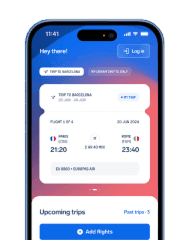
Add your trip in the free AirHelp app, and you'll see the option to buy a discounted fast track pass for your specific departure airport. It only takes a minute to add, and you can do it any time before you fly — so if your airport's worst-case wait is one of the longer ones in our data, it's worth checking before you head out.
You can also track your flight and check whether you're owed up to €600 in airline compensation if something goes wrong.

Frequently asked questions
Is airport fast track worth it?
Yes, at almost every airport in our dataset — the worst-case average wait is far longer than the ~15 minutes fast track takes.
Which airports don't have a fast track option?
Paris-Orly has none, and Paris Charles de Gaulle and Zurich only offer one bundled into a full VIP package. Munich and Berlin Brandenburg currently have no fast track option either, despite Munich having one of Germany's longer worst-case waits.
Where is fast track not worth using?
Brussels-Zaventem and Istanbul, where the regular security line is already about as fast as a fast track lane.
Does the day of the week affect airport security wait times?
Yes. Monday, Thursday and Friday are the most common worst days for security queues across the 30 biggest European airports we tracked.
How can I get fast track access for free?
Next flight coming up? Add your trip in the AirHelp app and buy a fast track pass for your departure airport.